What Is Insulin Resistance: Causes, Symptoms and How to Manage It
Key Takeaways
- Insulin resistance means the body's cells do not respond to insulin as well as they should, so the pancreas may make more insulin to compensate.
- It can come from a mix of lifestyle, genetic, hormonal and medical factors, including increased abdominal fat. It often has no noticeable symptoms.
- Insulin resistance, prediabetes and type 2 diabetes are related but not the same. No single routine blood test diagnoses insulin resistance in everyone.
- Regular activity, balanced eating, better sleep and sustainable weight changes can improve insulin sensitivity. A GP can advise which tests suit you.
Insulin resistance is a condition in which the body’s cells do not respond effectively to insulin, a hormone that helps glucose move from the bloodstream into the cells for energy. As a result, the pancreas may produce more insulin to maintain normal blood glucose levels. If this continues for some time, this can contribute to raised blood glucose, prediabetes and type 2 diabetes.
Insulin resistance usually develops without noticeable symptoms, thus it becomes very important to understand the associated risk factors and possible physical signs that appear due to it. Therefore a private diabetes test can help assess your blood glucose levels and identify conditions such as prediabetes and type 2 diabetes, although they do not confirm the presence of insulin resistance.
If you have noticed changes in your health, book an appointment with Dr Faizal Secretary at My Private Clinic to discuss your concerns and to understand whether further assessment may be appropriate in your situation or not.
What Happens When the Body Becomes Insulin Resistant?
When insulin resistance develops, the body’s cells do not respond to insulin as effectively as they should. To compensate, the pancreas may produce more insulin to help glucose move from the bloodstream into the cells.
In the early stages, this extra insulin may be enough to keep blood glucose levels within the normal range. This means a person can have insulin resistance without having prediabetes or type 2 diabetes.
However, as time passes by, the pancreas can no longer produce enough insulin thus leading to increased glucose levels in the blood. Over time, this can contribute to prediabetes and, in some people, type 2 diabetes.
The condition does not progress in the same way for everyone, and some people may have insulin resistance for years without developing diabetes.
What Can Increase Your Risk of Insulin Resistance?
Insulin resistance can develop due to a combination of lifestyle, genetic, hormonal and medical factors.
Common causes include:
- Increased abdominal fat: Increased fat stores around the waist can lead to decreased insulin sensitivity. However, Insulin Resistance can occur in non-overweight people also.1
- Lack of physical activity: Sitting for long periods of time or not being active can affect your muscles’ ability to use glucose efficiently.
- Family history: Having a family history of type 2 diabetes can increase your risk of having insulin resistance.
- Polycystic Ovary Syndrome (PCOS): PCOS is often associated with Insulin Resistance.2
- Obstructive Sleep Apnoea and hormone conditions: Conditions such as Obstructive Sleep Apnoea and Cushing’s Syndrome can affect insulin sensitivity.
- Medication: Certain medications such as corticosteroids and some antipsychotic medicines can affect glucose levels.
Having one or more of the above risk factors doesn’t necessarily mean you are insulin resistant. Dr Faizal Secretary will review your medical history and discuss whether you require any further assessment or not.
What Are the Possible Signs of Insulin Resistance?
Insulin resistance often develops without noticeable symptoms.
However, there are some physical health concerns that can be observed in people who are insulin resistant.
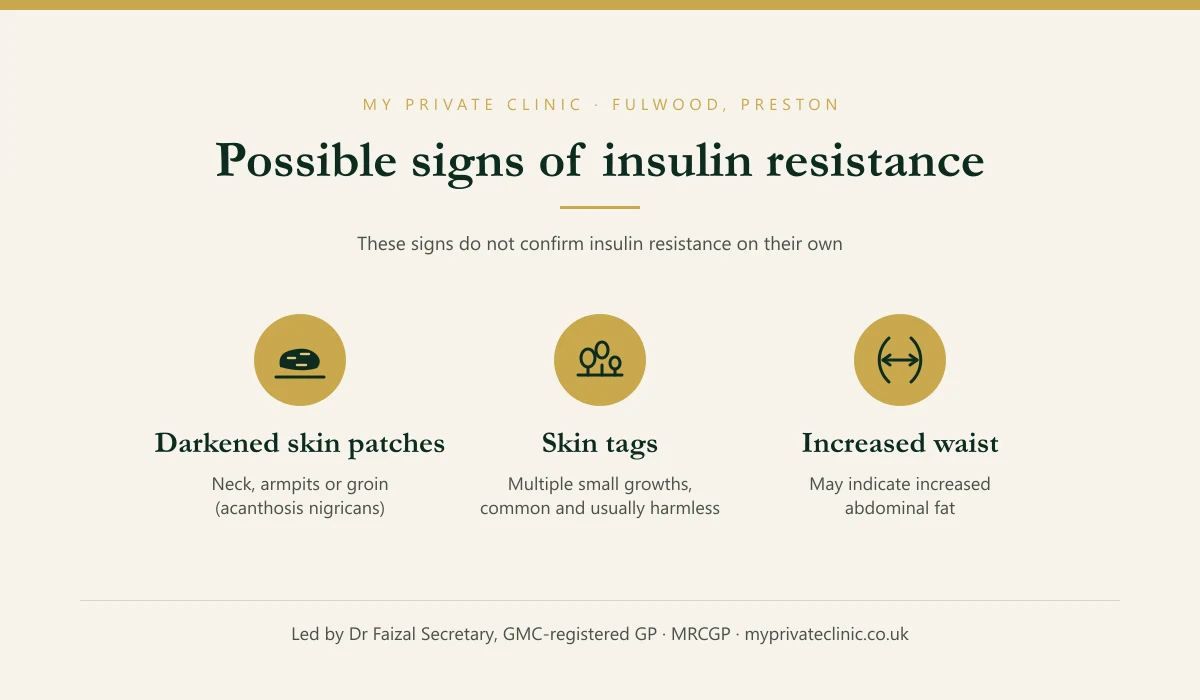
- Darkened skin patches: Acanthosis nigricans can cause darker, thicker or velvety-looking skin, particularly around the neck, armpits and groin.
- Skin tags: Multiple small skin growths, also known as skin tags, have been associated with insulin resistance, although they are common and usually harmless.3
- Increased waist circumference: A larger waist may indicate increased abdominal fat, which is associated with insulin resistance.
Fatigue and increased hunger can have many different causes and should not be treated as specific signs of insulin resistance. Increased thirst, frequent urination, unexplained weight loss and blurred vision may indicate high blood glucose or diabetes and should be assessed by a healthcare professional.
These signs do not confirm insulin resistance. Your GP will consider them alongside your medical history, risk factors and appropriate blood tests.
Insulin Resistance, Prediabetes and Type 2 Diabetes: What’s the Difference?
These conditions are related, but they do not mean the same thing.
| Condition | What it means |
|---|---|
| Insulin resistance | The body’s cells respond less effectively to insulin. Blood glucose may still be normal. |
| Prediabetes | Blood glucose is higher than normal but below the diagnostic threshold for type 2 diabetes. |
| Type 2 diabetes | Blood glucose levels are persistently high because the body does not use insulin effectively and may not produce enough insulin. |
Insulin resistance can contribute to prediabetes and, in some people, type 2 diabetes. However, this progression is not the same for every individual.
You can read more about type 2 diabetes to understand the condition and its possible effects.
Which Blood Tests Can Help Identify Insulin Resistance?
There is no single routine blood test that diagnoses insulin resistance in everyone. Depending on your condition, Dr Faizal may ask for a private diabetes test which includes:
- HbA1c test: This test measures your average blood glucose levels over the last 2-3 months. It can help identify pre-diabetes and type 2 diabetes but will not specifically tell you if you have Insulin Resistance.
- Fasting blood glucose: This can help identify high blood glucose levels.
- Fasting insulin: Measures insulin levels after fasting and may provide additional information in selected clinical situations.
- HOMA-IR: Uses fasting glucose and insulin measurements to estimate insulin resistance. It is not a standalone diagnostic test.
You can also explore My Private Clinic’s private blood test services or discuss which investigations may be suitable for you with Dr Faizal.
Find Out Which Tests May Be Suitable for you by Contacting My Private Clinic
How Can You Improve Insulin Sensitivity Through Everyday Changes?
Small, consistent lifestyle changes can help improve insulin sensitivity. You do not necessarily need strict diets or demanding exercise routines. Just focus on habits that you can maintain consistently.
1. Build Balanced Meals with Fibre and Protein
Include vegetables, whole fruits, pulses, whole grains and protein-rich foods in your meals. Sources of healthy fats, such as nuts, seeds and olive oil, can also form part of a balanced diet.
Instead of cutting out carbohydrates completely, pay attention to portion sizes and choose fibre-rich options more often. Limit sugary drinks, sweets and frequent consumption of highly processed foods.
2. Avoid Long Periods of Inactivity
Walking, cycling, swimming and strength training can help your muscles use glucose more effectively. You can also break up long periods of sitting by standing, walking around or doing light activities throughout the day.
Choose activities that suit your fitness and health, and build up gradually.
3. Take a Short Walk After Meals
A short walk after eating can help your muscles use glucose and may reduce the rise in blood glucose after a meal. You can also start with just 10 minutes in the beginning.
4. Manage Your Weight Where Appropriate
If you carry excess abdominal weight, gradual and sustainable weight management may help improve insulin sensitivity. However, insulin resistance can also affect people who are not overweight, so focus on your overall health rather than weight alone.1
5. Maintain Regular Eating and Sleep Routines
Maintaining consistency in eating and sleep times and avoiding excessive intake of sugary drinks or frequent high-calorie snacks may support better metabolic health.
Intermittent fasting is not necessary for everyone. A 16-hour fasting routine (as suggested online) should not be treated as a standard requirement for improving insulin resistance. If you are considering fasting, speak to your GP first, particularly if you have diabetes or you are on any kind of medication that can lower blood glucose.
6. Manage Existing Health Conditions
Conditions such as PCOS and obstructive sleep apnoea may affect metabolic health. Managing them with appropriate medical advice can form an important part of your overall care.
Some medicines can also affect blood glucose, so discuss with your GP first before stopping or changing medication yourself.
Can Insulin Resistance Be Reversed or Improved?
Insulin sensitivity can improve when contributing factors are addressed. Regular physical activity, balanced eating habits, better sleep and sustainable weight management where appropriate can all help.4
The extent of improvement varies between individuals and depends on factors such as genetics, existing health conditions and overall health. There is no guaranteed timeline, and some of you might need medical treatment alongside lifestyle changes for better results.
Common Questions About Insulin Resistance
How do you know if you are insulin resistant?
Insulin resistance often develops without noticeable symptoms. Your GP will review your medical history, risk factors, physical signs and blood test results to assess your metabolic health and decide whether further investigations are needed. Darkened skin patches around the neck or armpits can be associated with insulin resistance, but they do not confirm the condition.
What is the biggest cause of insulin resistance?
There is no single cause. Excess abdominal fat and physical inactivity are recognised risk factors, while genetics, PCOS, hormonal conditions and certain medications can also contribute to this condition.
How can you check for insulin resistance at home?
There is no reliable home test that confirms insulin resistance. Home glucose monitors measure blood glucose, not insulin resistance itself. If you are concerned, speak to a healthcare professional about appropriate assessment and testing.
What is the best diet for controlling insulin resistance?
A balanced diet containing vegetables, whole fruits, pulses, whole grains and protein-rich foods can support metabolic health. Limiting sugary drinks and highly processed foods may also help. No single diet plan works for everyone.
Which fruits are best for insulin resistance?
Whole fruits such as berries, apples, pears and citrus fruits can form part of a balanced diet. They provide fibre and other nutrients. Whole fruit is generally preferred over fruit juice because it retains more natural fibre.
What exercises can help improve insulin resistance?
Walking, cycling, swimming and strength training can all support insulin sensitivity. A combination of aerobic activity and muscle-strengthening exercises is useful. Start slowly and choose activities that suit your fitness and health well.
Can insulin resistance go back to normal?
Insulin sensitivity can improve through lifestyle changes, but the extent of improvement varies between individuals. There is no guaranteed timeline, so ongoing attention to metabolic health is important.
Get Medical Advice About Your Insulin Resistance Concerns
If you are concerned about insulin resistance, blood glucose levels or your risk of type 2 diabetes, a consultation with your GP can help you understand your health concerns and whether further assessment is needed.
Book an appointment with Dr Faizal at My Private Clinic to discuss your concerns and appropriate testing options.
References
- Zhang M, Hu T, Zhang S, Zhang L. Associations of different adipose tissue depots with insulin resistance: a systematic review and meta-analysis of observational studies. Sci Rep. 2015;5:18495. doi:10.1038/srep18495. View on PubMed
- Teede HJ, Tay CT, Laven JJE, et al. Recommendations from the 2023 International Evidence-based Guideline for the Assessment and Management of Polycystic Ovary Syndrome. J Clin Endocrinol Metab. 2023;108(10):2447-2469. doi:10.1210/clinem/dgad463. View the guideline
- Barbato MT, Criado PR, Silva AK, Averbeck E, Guerine MB, Sá NB. Association of acanthosis nigricans and skin tags with insulin resistance. An Bras Dermatol. 2012;87(1):97-104. doi:10.1590/s0365-05962012000100012. View on PubMed
- National Institute for Health and Care Excellence. Type 2 diabetes: prevention in people at high risk. Public health guideline [PH38]. Published 12 July 2012. Last updated 15 September 2017. View on NICE
Editorial and medical review
Who wrote and checked this page
-

Written by
Healthcare Content Writer · MSc, Biotechnology · HubSpot Content Marketing Certification
-

Every clinical page is checked by our medical content editor and approved by Dr Faizal before it is published. Read our editorial standards.