How to Lose Weight with Insulin Resistance: Diet and Lifestyle Tips
Key Takeaways
- Losing weight with insulin resistance is possible. Balanced eating, regular exercise and sustainable lifestyle changes can help support weight loss and improve insulin sensitivity.
- There is no single best diet. Fibre-rich foods, wholegrains, protein with meals and unsaturated fats help, while sugary drinks and foods high in added sugar are best limited.
- Aim for at least 150 minutes of moderate-intensity activity per week, or 75 minutes of vigorous activity, with muscle-strengthening activities on at least two days a week.
- Losing excess weight may improve insulin sensitivity, but it does not guarantee complete reversal. Speak to a GP if changes are not working or you are worried about type 2 diabetes.
Losing weight with insulin resistance is possible, but it requires a structured and well-planned approach. It is because when your cells respond less effectively to insulin, your body has to work harder to regulate blood glucose. Insulin resistance is also associated with excess abdominal fat and other metabolic changes that can make weight management more challenging.
Therefore, a combination of balanced eating, regular exercise and sustainable lifestyle changes can help support weight loss and improve insulin sensitivity. The aim is to find an approach that suits your health needs rather than relying on restrictive diets or quick fixes. At My Private Clinic in Preston, Dr Faizal Secretary offers GP-led support for weight management and maintenance of overall health.
Book a consultation with Dr Faizal to discuss the best option for your situation.
Why Can Insulin Resistance Make Weight Loss More Difficult?
Insulin is a hormone produced by the pancreas that helps the body’s cells take up glucose from the bloodstream for energy. With insulin resistance, cells respond less effectively to insulin. The pancreas may initially compensate by producing more insulin, a state known as hyperinsulinaemia.
Persistently raised insulin levels are associated with metabolic processes involved in fat storage and breakdown, which may contribute to weight-management difficulties for some people. Excess visceral fat is also associated with insulin resistance.1
But please take note that insulin resistance is not the only reason someone may find weight management difficult. Sleep, stress, medicines, thyroid function, other hormonal factors, eating patterns, physical activity and overall energy balance can all be responsible for making weight loss difficult.
Can You Lose Weight If You Have Insulin Resistance?
Yes you can lose weight with insulin resistance also, although the approach and results vary between individuals. Sustainable changes to eating habits and physical activity are generally more practical in the long term results than highly restrictive diets.
Progress is not measured only by the number on the scales. Improvements in fitness, waist measurement, blood glucose regulation and other aspects of metabolic health may also be meaningful.
What Is the Best Diet for Weight Loss with Insulin Resistance?
There is no single diet that is best for everyone with insulin resistance. Food choices depend upon your health conditions, medication, preferences and daily routine. However balanced dietary patterns that include minimally processed foods and a suitable mix of nutrients is generally preferred.2
The most preferred diet that may support weight management and contribute to the overall health include:
- Fibre-rich foods. Vegetables, beans, lentils, oats, wholegrains and fruit provide fibre, which can support fullness and help in controlling the rise in blood glucose after meals.
- Wholegrains where practical. Oats, barley, brown rice and wholegrain bread are useful alternatives to many refined grains.3
- Include protein with meals. Eggs, fish, poultry, tofu, pulses and dairy foods can help with fullness and support the maintenance of muscle during weight loss.
- Choose unsaturated fats. Olive oil, nuts, seeds, avocado and oily fish can form part of a balanced, heart-healthy eating pattern.
- Be aware of portions. Although nutritious, the portion of the food taken can also contribute to excess energy intake.
- Limit sugary drinks and foods high in added sugar. Fizzy drinks, sweetened coffees, confectionery and similar foods can add substantial sugar and energy without providing much nutritional value.
A lower-carbohydrate approach may suit some people, but it is not essential for everyone. Carbohydrates do not need to be eliminated completely; their quality, amount and place within the overall eating pattern matter more. If you take insulin or another medicine that can cause low blood glucose, discuss significant dietary changes with Dr Faizal before implementing them.
Which Foods Should You Include or Limit?
Practical food choices can make a balanced eating pattern easier to follow.
Foods to include
- Non-starchy vegetables: broccoli, spinach, courgette, peppers and green beans.
- Fibre-rich wholegrains: oats, wholegrain bread, brown rice, barley and quinoa.
- Beans and pulses: chickpeas, kidney beans and lentils.
- Protein sources: chicken, turkey, eggs, fish and tofu.
- Nuts and seeds: almonds, walnuts and sunflower seeds, in suitable portions.
- Unsaturated fats: olive oil and avocado.
- Whole fruit: berries, apples and pears.
Foods to limit or moderate
- Sugar-sweetened drinks: fizzy drinks, fruit squash, energy drinks and sweetened coffees.
- Foods high in added sugar: biscuits, cakes, confectionery and sweetened breakfast cereals.
- Large or frequent portions of refined carbohydrates: such as white bread, white rice and chips.
- Highly processed snack foods: particularly those high in salt, added sugar or saturated fat.
There is no need to ban particular foods or remove all carbohydrates from your diet. Aim for an eating pattern that is balanced, practical and sustainable.
What Exercise Helps with Insulin Resistance and Weight Loss?
Regular physical activity can support insulin sensitivity and glucose regulation. Research suggests that combining exercise with dietary changes may improve insulin resistance more effectively than dietary changes alone in people with overweight or obesity.4
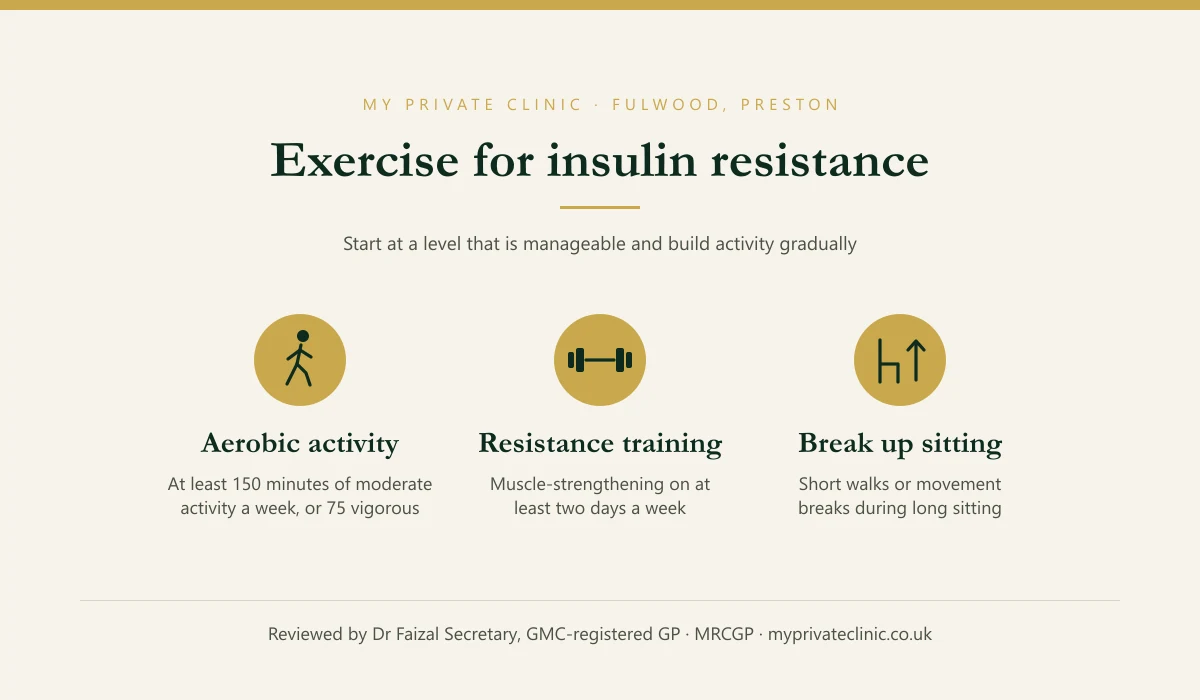
Both aerobic activity and muscle-strengthening exercise are useful and can give noticeable results:
- Aerobic activity: brisk walking, cycling, swimming and dancing support cardiovascular health. It is advised to take at least 150 minutes of moderate-intensity activity per week, or 75 minutes of vigorous activity.
- Resistance training: bodyweight exercises, free weights and resistance bands help build or maintain muscle. Muscle plays a major role in insulin-mediated glucose uptake. Thus muscle-strengthening activities are recommended on at least two days a week.
- Break up long periods of sitting: short walks or movement breaks are associated with lower blood glucose and insulin levels, compared to continuous, uninterrupted sitting.5
Always start at a level that is manageable and build activity gradually.
Note: Consistency is more important than beginning with an intense routine that is difficult to maintain.
Can Losing Weight Improve Insulin Resistance?
Losing excess weight may improve insulin sensitivity and blood glucose regulation, although the extent of improvement differs between individuals.
Weight loss does not guarantee that insulin resistance will completely resolve. Genetics, the duration of the condition, other health factors and the sustainability of lifestyle changes can all influence outcomes.
The Diabetes Prevention Programme found that an intensive lifestyle intervention combining dietary changes, physical activity and a weight-loss goal reduced the incidence of type 2 diabetes among people at high risk.6
How Long Does It Take to Improve Insulin Resistance?
There is no universal timeline. Progress depends on individual health, the degree of insulin resistance, other medical conditions and how consistently lifestyle changes can be maintained. Improvement does not necessarily mean complete reversal.
Your GP can help monitor progress through appropriate follow-up and blood tests. The tests used will depend on individual circumstances and weight alone does not show the full picture.
When Should You Seek Medical Advice?
Consider speaking with Dr Faizal if:
- You have made consistent changes to your diet and activity but are still finding weight management difficult.
- You have prediabetes or a condition associated with metabolic health, such as polycystic ovary syndrome (PCOS) or metabolic dysfunction-associated steatotic liver disease (MASLD).
- You are concerned about blood glucose levels or your risk of developing type 2 diabetes.
- You take medication that can affect blood glucose or body weight and are considering significant dietary changes.
- You have unexplained weight changes alongside symptoms such as persistent fatigue, irregular periods or increased thirst.
A GP can review possible contributing factors, discuss appropriate tests and help you access suitable support, such as dietary advice or a structured weight-management service.
Frequently Asked Questions
What Is the Fastest Way to Lose Weight with Insulin Resistance?
Lose weight with insulin resistance through balanced meals, fibre-rich foods, suitable protein and regular physical activity. Reduce sugary drinks and foods high in added sugar. Avoid quick-fix diets and build sustainable habits that support metabolic health.
What Is the Best Diet for Weight Loss If I Have Insulin Resistance?
Choose a balanced diet for weight loss with insulin resistance. Include vegetables, wholegrains, pulses, suitable protein sources and unsaturated fats. There is no single best diet for everyone.
Will Insulin Resistance Go Away If I Lose Weight?
Losing excess weight can improve insulin sensitivity and metabolic health in some people. However, weight loss does not guarantee that insulin resistance will resolve completely. Results vary between individuals. Focus on improving overall health and relevant metabolic measurements rather than expecting a guaranteed reversal.
How Fast Can I Reverse Insulin Resistance?
There is no fixed timeframe for improving insulin resistance. Progress depends on individual health, other medical conditions and the consistency of lifestyle changes. Insulin sensitivity may improve over time, but improvement does not guarantee complete reversal. Track relevant metabolic measurements with guidance from a healthcare professional.
Ready to Take the Next Step?
Managing weight alongside insulin resistance may be easier with appropriate support. Explore our weight management service or read our insulin resistance guide for more information.
References
- Zhang M, Hu T, Zhang S, Zhou L. Associations of different adipose tissue depots with insulin resistance: a systematic review and meta-analysis of observational studies. Sci Rep. 2015;5:18495. doi: 10.1038/srep18495.
- Ley SH, Hamdy O, Mohan V, Hu FB. Prevention and management of type 2 diabetes: dietary components and nutritional strategies. Lancet. 2014;383(9933):1999–2007. doi: 10.1016/S0140-6736(14)60613-9.
- Reynolds A, Mann J, Cummings J, Winter N, Mete E, Te Morenga L. Carbohydrate quality and human health: a series of systematic reviews and meta-analyses. Lancet. 2019;393(10170):434–445. doi: 10.1016/S0140-6736(18)31809-9.
- Khalafi M, Alamdari KA, Symonds ME, Rohani H, Sakhaei MH. A comparison of the impact of exercise training with dietary intervention versus dietary intervention alone on insulin resistance and glucose regulation in individuals with overweight or obesity: a systematic review and meta-analysis. Crit Rev Food Sci Nutr. 2023;63(28):9349–9363. doi: 10.1080/10408398.2022.2064424.
- Loh R, Stamatakis E, Folkerts D, Allgrove JE, Moir HJ. Effects of interrupting prolonged sitting with physical activity breaks on blood glucose, insulin and triacylglycerol measures: a systematic review and meta-analysis. Sports Med. 2020;50:295–330. doi: 10.1007/s40279-019-01183-w.
- Knowler WC, Barrett-Connor E, Fowler SE, Hamman RF, Lachin JM, Walker EA, Nathan DM; Diabetes Prevention Program Research Group. Reduction in the incidence of type 2 diabetes with lifestyle intervention or metformin. N Engl J Med. 2002;346(6):393–403. doi: 10.1056/NEJMoa012512.
Editorial and medical review
Who wrote and checked this page
-

Written by
Healthcare Content Writer · MSc, Biotechnology · HubSpot Content Marketing Certification
-

Every clinical page is checked by our medical content editor and approved by Dr Faizal before it is published. Read our editorial standards.