How To Read A Blood Test? All Common Blood Test Results Explained
How to read a blood test report is a common question after having a blood test. The report has so many numbers, abbreviations and reference ranges on it that it can be confusing for anyone without medical training. That confusion can lead to unnecessary stress and wrong interpretations.
This guide explains common blood test results in plain language. From a full blood count to hormone profiles, you will understand reference ranges, what high and low numbers mean, and when you need to see a GP.
At My Private Clinic, Dr Faizal offers private blood tests in Preston and explains the results himself, clearly, so you do not have to work them out on your own.
Understanding What a Blood Test Shows
A blood test gives a snapshot of your health and what is going on inside your body. A nurse, GP or phlebotomist takes a blood sample, which is then processed in a laboratory to check the health markers specific to the test.
The NHS explains that blood tests are done to:
- Check your overall health.
- Find what is causing your symptoms, such as bloating or being tired all the time.
- Monitor how organs such as the kidneys or liver are working.
- Look for infection or inflammation in the body.
- Monitor an ongoing health condition.
- Check for signs of disease.
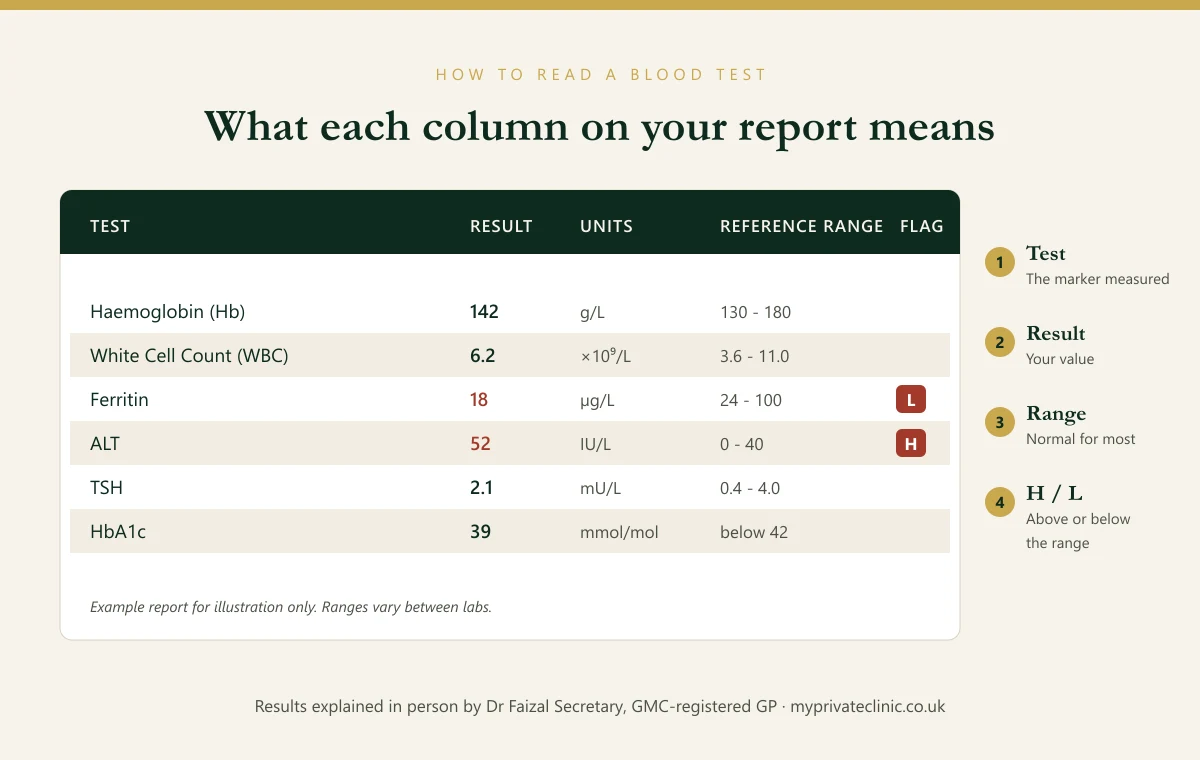
Your report will show a list of tests, your result and a normal range. Some reports also show letters, such as H for high or L for low, when a result sits outside the reference range.
At My Private Clinic, we offer a walk-in blood test in Preston for your convenience, and results are always explained by Dr Faizal.
Blood Test Results and Meaning: What Is a Normal Range?
A blood test report includes a ‘reference range’. This is the normal range for a specific health marker, showing the values seen in most healthy people. Labs work out these ranges by testing thousands of healthy people.
Along with the report, your GP looks at the whole medical picture, including your symptoms, your medical and family history and any previous blood test results, before interpreting the findings.
Remember: a result far outside the normal range matters more than one or two numbers just outside it, and a pattern across several tests means more than a one-off result. This is why a GP may tell you not to worry about a result, even when it is flagged.
To learn about the reference ranges of various tests, see the guide by Cambridge University Hospitals.
Common Blood Test Results Explained: From FBC to Hormone Profiles
Confused about what your blood test shows? Below, common blood test results are explained, with the reference ranges of health markers and what high or low values may mean.
Note: this is general information, not a diagnosis. Please discuss your results with a GP.
What Does a Full Blood Test Show? FBC Results Explained
An FBC, or full blood count, is one of the most frequently used blood tests. It looks at red cells, white cells, platelets and several other blood markers. Here’s a quick explanation of what the results may suggest.
| Blood Marker | Adult Reference Range | High Result May Suggest | Low Result May Suggest |
|---|---|---|---|
| Haemoglobin (Hb) | M: 130-180 g/L F: 115-165 g/L | Dehydration, smoking, or conditions causing high RBC production | Anaemia, blood loss, or deficiency of iron, vitamin B12 or folate |
| Red Cell Count (RBC) | M: 4.50-6.50 ×10¹²/L F: 3.80-5.80 ×10¹²/L | Dehydration, smoking, or high RBC production | Anaemia or blood loss |
| White Cell Count (WBC) | 3.6-11.0 ×10⁹/L | Infection, inflammation, or medication effects | Some viral infections, medication effects, or bone marrow issues |
| Haematocrit (HCT) | M: 0.40-0.54 L/L F: 0.37-0.47 L/L | Dehydration or an increased number of RBCs | Anaemia or blood loss |
| Mean Cell Volume (MCV) | 80-100 fL | Larger red cells, often linked to B12 or folate deficiency | Smaller red cells, commonly seen with iron deficiency |
| Mean Cell Haemoglobin (MCH) | 27-32 pg | Large red cells (macrocytosis) linked to B12 or folate deficiency | Iron deficiency |
| Platelets | 140-400 ×10⁹/L | Increased platelet production, infection, or inflammation in the body | Increased risk of bruising or bleeding |
| Neutrophils | 1.8-7.5 ×10⁹/L | Inflammation or a bacterial infection | Risk of infection |
| Lymphocytes | 1.0-4.0 ×10⁹/L | Viral infection or an inflammatory condition | Infection or immunity problems |
| Eosinophils | 0.1-0.4 ×10⁹/L | Allergies or parasitic infections | Usually of little significance |
The ranges above are from the Gloucestershire Hospitals NHS Foundation Trust guide. They may vary slightly between labs, and your GP always interprets them in relation to your symptoms and medical history.
Liver Blood Test Results Explained
A liver function test assesses how well your liver is working. According to SPS NHS, this is what an LFT evaluates:
| Liver Marker | Adult Reference Range | High Results May Suggest | Low Results May Suggest |
|---|---|---|---|
| ALT (a liver enzyme) | 0-40 IU/L | Liver cell damage or inflammation (fatty liver disease or hepatitis) | Typically not clinically significant |
| AST (a liver enzyme) | 0-40 IU/L | Liver cell damage. It can also rise with a heart or muscle condition. | Typically not clinically significant |
| Bilirubin (a yellowish pigment in the blood) | 5-21 micromol/L | Jaundice, a blocked bile duct, or liver dysfunction | Typically not clinically significant |
| Albumin (a liver protein) | 35-50 g/L | Dehydration (an uncommon finding) | The liver isn’t producing enough albumin |
| ALP (alkaline phosphatase) | Varies by lab. Please check your local reference range. | Possible bile duct blockage, especially if GGT is also high | Typically not clinically significant |
| GGT (gamma-glutamyl transferase) | 0-50 IU/L | Bile duct blockage or liver damage caused by alcohol | Typically not clinically significant |
Remember: one high result doesn’t mean liver disease. Your GP interprets the results by relating them to your symptoms.
Kidney Blood Test Results Explained
A kidney function test shows how well your kidneys are filtering waste out of your body. It is sometimes called a U&E test, short for urea and electrolytes.
Here are U&E blood test results explained, according to Kidney Research UK:
| Kidney Marker | Adult Reference Range | High Results May Suggest | Low Results May Suggest |
|---|---|---|---|
| eGFR | Above 90 is normal; values as low as 60 can still be considered normal if there’s no other evidence of kidney disease. | Not applicable, as eGFR is a rate, not a marker that rises | Reduced kidney function |
| Creatinine | Varies by sex, age and muscle mass. It is interpreted alongside eGFR. | The kidneys are not filtering waste effectively | Typically not clinically significant |
| Sodium (Na) | 135-145 mmol/L | Dehydration or an excess salt/fluid imbalance | Fluid overload |
| Potassium (K) | 3.5-5.0 mmol/L | Can affect heart and muscle function; needs prompt medical attention if significantly high | Can affect heart or muscle function |
Doctors watch these levels closely, as results that are too high or too low can be serious. If your kidney blood test results are too low or too high, it is best to book a private GP consultation to understand what is going on.
How to Read a Cholesterol Blood Test?
A cholesterol test is also called a lipid test, and it measures the level of fats in your blood. Heart UK explains that a lipid profile looks at the levels of:
| Cholesterol Marker | Adult Reference Value | High Results May Suggest | Low Results May Suggest |
|---|---|---|---|
| Total cholesterol | Below 5.0 mmol/L | Increased risk of heart disease | Not clinically significant |
| LDL (“bad” cholesterol) | Below 3.0 mmol/L | Increased risk of heart disease | Not clinically significant |
| HDL (“good” cholesterol) | M: Above 1.0 mmol/L F: Above 1.2 mmol/L | Not usually a concern on its own | Less cholesterol is being cleared from the body |
| Triglycerides | Fasting: Below 1.7 mmol/L Non-fasting: Below 2.0 mmol/L | Excess weight or a health condition linked to the heart, liver or diabetes | Not clinically significant |
| Non-HDL cholesterol | Below 4.0 mmol/L | Risk of heart disease | Not clinically significant |
Your doctor considers your age, blood pressure, weight and family history along with your cholesterol test to work out your overall risk of heart disease.
Thyroid Blood Test Results Explained
The thyroid is a small gland in your neck that regulates your energy, weight and mood. A thyroid test checks the hormones that the thyroid gland releases.
Here is thyroid test information from the British Thyroid Foundation:
| Thyroid Function Marker | Adult Reference Value | High Results May Suggest | Low Results May Suggest |
|---|---|---|---|
| TSH (thyroid-stimulating hormone) | 0.4-4.0 mU/L | Hypothyroidism (underactive thyroid symptoms, e.g. tiredness or weight gain) | Hyperthyroidism (overactive thyroid) |
| Free T4 | 9.0-25.0 pmol/L | Overactive thyroid, usually with a low TSH | Underactive thyroid |
| Free T3 | 3.5-7.8 pmol/L | Overactive thyroid. It is usually checked alongside T4 when TSH is low. | Not routinely used as a standalone marker for an underactive thyroid |
When checking thyroid blood test results, doctors look at the pattern of results, not just one number.
If you are unsure how to read and understand your thyroid test results, you can consult Dr Faizal at My Private Clinic.
Diabetes Blood Test Results Explained: What an HbA1c Test Shows
An HbA1c test gives an average of your blood sugar over the previous 2-3 months and does not require fasting. According to Lab Tests Online UK, this is how the diabetes test is interpreted:
| HbA1c Result | Classification | What Does It Mean? |
|---|---|---|
| Below 42 mmol/mol | Normal blood sugar level | No diabetes |
| 42-47 mmol/mol | Prediabetes | Impaired glucose regulation and a high risk of type 2 diabetes |
| 48 mmol/mol or above | Diabetes range | If you have symptoms, this range confirms the diagnosis. If there are no symptoms, the test is usually repeated within 4 weeks to confirm. |
If you have already been diagnosed with type 2 diabetes or are at risk of it, you can consult Dr Faizal for a personalised plan of care.
Iron Blood Test Results Explained
An iron or ferritin blood test shows the level of iron stored in your body. Here’s what ferritin levels may suggest.
| Marker | Result Range | What Does It Mean? |
|---|---|---|
| Ferritin | M: Below 24 µg/L F: Below 11 µg/L | Confirms iron deficiency, especially when there is anaemia |
| Ferritin (indeterminate range) | M: 24-100 µg/L F: 11-100 µg/L | Still considered normal, but ongoing heart or kidney conditions should also be considered |
| Raised ferritin | Above 100 µg/L | Linked to inflammatory conditions, infection or liver damage |
| Transferrin saturation | Below 16% | Indicates iron deficiency. When ferritin results are unclear, doctors test the transferrin saturation percentage. |
These thresholds are taken from the Royal United Hospitals Bath NHS guide and apply to non-pregnant adults.
Note: ferritin reference levels can vary slightly between labs.
Testosterone Blood Test Results Explained
As part of a well man check, a testosterone blood test shows the level of the male hormone.
| Men’s Age Group | Normal Testosterone Range | What Low Levels May Cause |
|---|---|---|
| 22-49 years | 6.9-23.2 nmol/L | Tiredness, low mood, reduced muscle and bone strength |
| 50+ years | 6.5-23.7 nmol/L | Same as above |
The test is best done in the morning, when levels are naturally higher; samples for men are ideally taken at 9 am, after an overnight fast.
Note: if you have noticed low testosterone symptoms or ED symptoms and do not want to face long NHS waiting times, please do not hesitate to book a confidential, personalised consultation with Dr Faizal for low testosterone treatment.
Female Hormone Blood Test Results
A female hormone test checks female hormones, especially when there are period problems, fertility questions or menopause symptoms. Some reference values are as follows:
| Female Hormone | Reference Range | What It May Indicate |
|---|---|---|
| Oestradiol | 80-420 pmol/L in the follicular phase | Levels below 110 pmol/L may indicate menopause |
| FSH | 1-9 IU/L (follicular phase) 30-118 IU/L (post-menopause) | Rises sharply after menopause due to decreased ovarian function |
| LH | 1-12 IU/L (follicular phase) 16-66 IU/L (post-menopause) | Also rises after menopause, together with FSH |
Female hormones fluctuate throughout the menstrual cycle, so the timing of the test matters. Hormonal ups and downs lead to symptoms such as hot flushes, mood changes or irregular periods.
You can consult our menopause clinic in Preston if you need help managing perimenopause or menopause symptoms.
What Does a Bone Profile Blood Test Show?
A bone profile test checks calcium, phosphate and other markers linked to bone health.
| Bone Health Marker | Adult Reference Range | What an Abnormal Result May Suggest |
|---|---|---|
| Calcium | 2.20-2.60 mmol/L | A result far outside this range may point to a bone, kidney or parathyroid issue |
| Phosphate | 0.8-1.5 mmol/L | Often investigated together with calcium and kidney function |
| ALP (alkaline phosphatase) | 30-130 U/L | Unexplained high levels may be related to bone or liver disease |
A bone profile is often done alongside a vitamin D blood test, since low vitamin D can affect how your body uses calcium.
Allergy Blood Test Results Explained
The ALEX allergy test checks for IgE antibodies that your body makes in reaction to an allergen (such as a food, pollen or nuts).
| Allergy Blood Test Result | What It May Mean |
|---|---|
| Negative/low IgE | No IgE sensitisation to that allergen was found. |
| Positive/high IgE | The immune system has reacted to the allergen, but this does not always mean it causes your symptoms. |
| Unclear results | Your GP or allergy specialist may suggest more tests, such as a skin prick test. |
In short: an allergy blood test, such as a food intolerance test, is one part of the medical picture. Your GP will relate the result to your symptoms and medical history to confirm the allergy and its triggers.
What Are Red Flags in a Blood Test?
Some results are red flags, meaning they need urgent attention. Contact your GP as soon as possible if you see:
- Very low Hb levels, together with tiredness or shortness of breath.
- WBC levels that are far too high or too low.
- Signs of poor kidney function, especially with swelling or passing less urine.
- Very high liver enzymes, or jaundice.
- A very high glucose or HbA1c result.
- Calcium results far outside the normal range.
Ideally, your GP will contact you themselves if your results need urgent treatment.
In the meantime, if you have had a private blood test and need help understanding the report, Dr Faizal can look at it the same day, assess your symptoms and guide you towards the right next step.
Keep in mind: if you feel extremely unwell while waiting for results, seek help and do not wait for the report.
For help, you can book an urgent private GP consultation or call NHS 111 for advice. In an emergency, always call 999.
How Dr Faizal Can Help Explain Your Blood Test Results
Trying to read your own results is a good start, but numbers on a page do not tell you what is going on inside your body or whether it is a cause for concern.
At My Private Clinic in Preston, Dr Faizal reviews your blood test results with you in person. He explains what each result means for your health and looks at your symptoms and history too, not just the numbers on the page.
If something needs further tests or treatment, Dr Faizal will explain your options clearly, with a complete plan, not just a printout. You do not need an NHS referral to book, and same-day or next-day appointments are often available at our clinic in Fulwood, Preston.
Final Words on How to Read a Blood Test Report
Learning how to read a blood test takes time, and it is always best to have a doctor or GP explain the results. To understand your report, compare each of your numbers with its reference range to see whether it is within the normal range.
If you see a number that is extremely high or low, contact your GP; they will relate your results to your symptoms and help you understand the next step. Remember, a result outside the range is not always a problem, but it is always worth asking about.
If you are searching for blood tests near me and would like your blood test results explained clearly in person, Dr Faizal Secretary can help. Book a consultation at My Private Clinic in Preston today.
FAQ: Blood Test Results Explained UK
How do I interpret my blood test results?
Look at each result next to its normal range. A result inside the range is usually reassuring. One slightly outside the range is often not a worry, especially if you feel well. If you are confused about your blood test results, Dr Faizal can help explain any flagged results, relating them to your symptoms and history too.
How do you read a blood test result in the UK?
A UK blood test report shows the test name, your result, the unit used and the normal range for that health marker. Some reports show an H or L if your result sits outside this range. If you see an H or L on your report, it is worth asking your GP.
What are the codes on a blood test?
The codes are the names of tests. For example, FBC means full blood count, and TSH means thyroid-stimulating hormone. Your GP or the lab report can explain any codes that you do not understand.
What does a PSA blood test show?
PSA means prostate-specific antigen. A PSA blood test is used to look at prostate health in men. A raised PSA result can have several causes. Your GP will look at your age, symptoms and history before deciding what to do.