Male Menopause in Preston: Symptoms, Testing & Treatment Options
Male menopause can cause symptoms such as low libido, persistent fatigue, mood changes, reduced muscle strength and weight gain when testosterone levels become lower. If you are experiencing these changes, testosterone deficiency may be one possible cause, but similar symptoms can have other explanations.
In Preston, male menopause testing typically involves assessing your symptoms and checking testosterone levels through blood tests. This guide explains the symptoms, diagnosis and treatment options, including the differences between NHS and private testing.
If you have any concerns regarding the symptoms of male menopause or lack of testosterone, you should visit a private GP in Fulwood, Preston at My Private Clinic, where you can talk about your health concerns and arrange necessary tests to evaluate the underlying conditions.
Hormonal Ageing in Men: What Male Menopause Really Means?
The phenomenon of male menopause can be viewed as Andropause or late-onset hypogonadism, the normal decrease in testosterone and other important hormones in a man. Some institutions call this testosterone deficiency syndrome in men.
In contrast to female menopause, which happens relatively quickly, andropause takes place very slowly. The peak of testosterone production for a man falls in his twenties; after this, a gradual decrease occurs at a rate of about 1% per year from the mid-thirties.
While most people do not have any visible manifestations due to such changes in hormones, in some cases, this change is too great and leads to symptoms at about 35-45 years old.
Do men go through menopause?
No, not exactly the same way as women, and it is often considered a myth or misleading statement. However, there is no biological necessity of menopause for men, but the term “menopause” continues to be used in relation to men since the symptoms are practically the same.
The Changes Men May Experience With Male Menopause
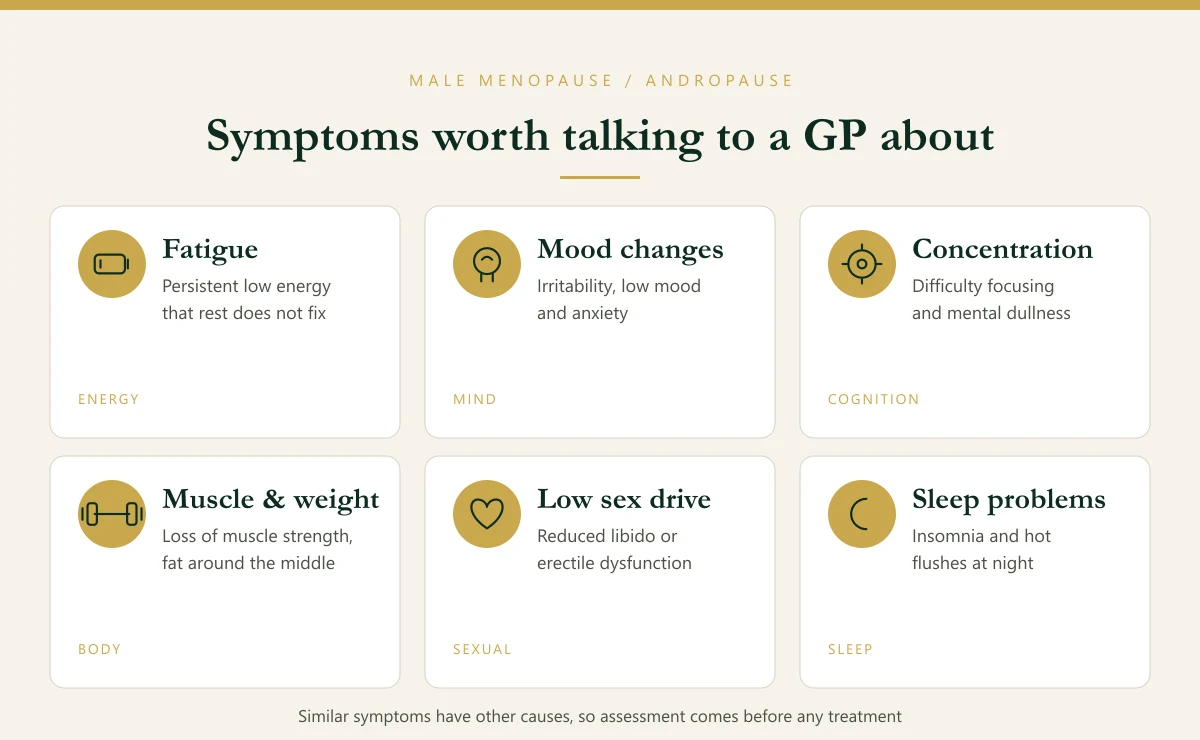
Menopausal symptoms can occur in the physical, emotional and sexual spheres and develop progressively without being noticed or explained. These symptoms of male menopause, as the NHS describes them, include:
- Fatigue or lack of energy
- Mood swings or irritability and anxiety
- Dullness of mind or inability to concentrate
- Loss of muscle or muscle weakness
- Obesity, especially accumulation of abdominal fat
- Lowered sex drive or erectile dysfunction
- Insomnia
- Hot flushes like in menopause in women
- Slow loss of bone mineral density
The Link Between Testosterone and Male Menopause
Testosterone is considered the main hormone in male menopause, and the test for the determination of its concentration is often used as the primary test to detect male menopause. The private testosterone test determines the concentration of testosterone at the moment of sampling. If the concentration of the hormone is low enough to provoke symptoms, then it is possible to talk about hypogonadism.
The presence of multiple symptoms mentioned above makes the measurement of testosterone concentration or a comprehensive Well Man health check a natural step to take.
Understanding the Causes of Male Menopause: Why Testosterone Levels May Decline?
Andropause can be caused by decreases in testosterone due to ageing. Testosterone usually decreases by 1-2% per year after the age of 30-40 years old.
Causes of Andropause and Hormonal Changes include:
- Ageing and health: Ageing leads to decreased levels of hormones. Metabolic syndrome, obesity, and diabetes lower testosterone levels.
- Lifestyle factors: Physical inactivity, unhealthy eating habits, excessive consumption of alcohol, smoking, chronic stress, and insomnia might decrease testosterone levels. Weight gain or obesity leads to increased levels of aromatase enzyme that converts testosterone into oestrogen, which reduces testosterone levels.
- Medications: Opiates, some kinds of steroids, certain antidepressants and antipsychotics, and chemo might lead to decreased testosterone.
- Hormonal disorders: Hypothyroidism and elevated SHBG (seen in individuals with excessive consumption of alcohol and smoking) cause low levels of free testosterone. Increased prolactin levels (seen in pituitary tumours) impair the functioning of the HPG axis.
- Genetics and testicles’ disorders: like Klinefelter
Low Oestrogen in Men: What to Know
Oestrogen is one of the hormones naturally produced in the body of men from testosterone. Testosterone and oestrogen play various significant functions in the health of men and hence low oestrogen in men is not always beneficial. The symptoms of hormonal imbalances are associated with what causes them and thus are clinically assessed.
Also, one more reason is the increased ratio between oestrogen and testosterone due to obesity or ageing. It is possible to restore hormonal balance by adopting a proper lifestyle.
NHS vs Private: Getting Tested and Diagnosed
If you believe you could be showing symptoms of andropause, then there are options that can either be NHS or private.
Male menopause treatment through the NHS:
- You can talk to your GP about these symptoms, and he/she will arrange for you to have a blood test to check your testosterone levels.
- Andropause is becoming a frequently talked-about subject in the workplace as well as within the NHS, where some trusts now offer paid leave and additional help for people with andropause symptoms.
- Clinical necessity requires testing and treatment via the NHS, but there might be a waiting list.
Private male menopause care:
- You are able to do your private test, which means that you will be able to get a testosterone blood test without having met strict referral criteria first.
- There are usually more flexible same day appointments available faster.
- In one appointment, you should get a full men’s health assessment which includes discussion of symptoms, the private blood test, or related private health screening where appropriate and another appointment to discuss the results including follow ups and ongoing monitoring.
Treatment Pathways for Male Menopause
The type of management is determined based on the cause and the degree of the symptoms.
The first step
The first step may include improving sleep, reducing stress, eating properly, losing extra weight, exercising, minimising alcohol consumption, and stopping smoking, as these measures can assist hormone balancing. In obese people, weight loss helps normalise testosterone production.
The next step
The next step involves treating any underlying conditions (sleep apnoea, depression, diabetes, high cholesterol) that may cause andropause.
TRT and HRT
- If the testosterone deficiency was diagnosed and the symptoms are present, Testosterone Replacement Therapy may be considered (after consulting an endocrinologist) (if criteria are met).
- The options for TRT are topical gel, monthly injections or patches (topical gel and monthly injections are the most common).
- In addition to hormone balancing, hormone replacement for the regulation of hormones in case of an excessive amount of oestrogen (it is rather rare and occurs in very overweight men), the focus is on weight loss or medication that blocks oestrogen. In most cases of andropause, the problem is low testosterone and oestrogen, so the priority is the normalisation of the testosterone level.
- Follow-up: men taking TRT require follow-up once in 3-6 months for dose adjustment and side effects detection.
- For more details about indications for TRT, methods, and potential risks, see the article about Testosterone replacement therapy.
Cost of private Male Menopause consultation
The cost of your medication will depend on your personalised treatment plan. Your initial consultation includes a comprehensive medical assessment to determine which route is a safe and appropriate treatment for you. At My Private Clinic you will be given a transparent cost coverage, so you know what is included even before your appointment.
Here is the breakdown:
| What you pay for | Cost |
|---|---|
| Initial consultation (30 minutes) | £119 |
| Testosterone check blood test (add-on) | £99 |
| Telephone / video (existing patients) | £49 |
View the full pricing page for all consultation fees.
What to Expect at Your Consultation with My Private Clinic, Preston
If you’re looking for Male Menopause treatment near me, or HRT in Preston, GP-guided menopause care, My Private Clinic offers you an opportunity to have a confidential assessment and discussion about the most suitable treatment options. You can arrange a private GP appointment with our expert GP.
What happens during your consultation?
1: Discussion
We discuss your symptoms, medical history, lifestyle, current medications and any concerns about your sexual health.
2: Assessment
We determine whether blood tests or further investigations are needed and explain your diagnosis and treatment options. Assessment may include following diagnostics:
- Hormone imbalance such as low serum testosterone levels can be the cause so private low testosterone is necessary to evaluate the causes of factors that can affect your energy, mood, concentration, sex drive and muscle strength.
- Sexual health in Preston to evaluate sexually transmitted diseases that can be present without causing symptoms and affect day to day life, which is why screening is often recommended.
- ECG / Heart Health Check records the electrical activity of your heart to investigate symptoms such as palpitations, dizziness, chest discomfort or irregular heartbeat.
- Obesity & weight concerns to manage weight for long-term health.
- High cholesterol risk assessment.
- Diabetes screening to prevent diabetes risk.
- Erectile dysfunction that can affect men of all ages. It can have great impact on confidence, relationships and sexual activity.
- Private thyroid disorder Thyroid disorders can affect your energy, weight, heart rate and mood.
3: Personalised Treatment Plan
You receive a personalised plan. Where clinically appropriate, this may include lifestyle advice, oral prescription medication, ongoing monitoring or specialist referral.
Treatment options may include:
- Lifestyle advice: lifestyle review to discuss your diet, exercise, sleep, smoking, alcohol intake, and other lifestyle factors that may affect your long-term health. Practical changes to support your sexual and overall health and medical weight management where clinically significant.
- Testosterone replacement therapy: TRT for diagnosed testosterone deficiency.
- Oral prescription medication: where clinically appropriate, following a full assessment.
- Hormonal replacement therapy: HRT in Preston to manage the symptoms of hormonal imbalance.
- Managing underlying conditions and other diagnostic procedures: treating health conditions that may be contributing to your symptoms.
- Ongoing monitoring.
- Follow-up to review your progress and adjust treatment where necessary.
Our aim is to improve your symptoms while addressing any underlying health concerns. For a broader assessment, we also offer a Men’s Health page.
Other options available at My Private Clinic include:
- Private GP appointment with ongoing support.
- Full health MOT in Preston to identify any undiagnosed or untreated conditions as a preventive assessment for overall physical wellbeing.
- Private blood tests to evaluate any hidden metabolic impact that can cause excess fat deposition, specifically visceral fat.
- Well man health checks for detailed and comprehensive medical review in order to assess general health conditions and risk factors.
Visit our full service page here.
FAQS
Do men get periods?
No. Men do not have their own menstrual cycles. The changes that take place during the course of menopause are slow and do not occur on a monthly basis.
How will I know that my male menopause symptoms are getting better or are over?
Since andropause is something that is progressive rather than having an actual occurrence, there is no specific point at which things are considered to be over, unlike with female menopause. Treatment for the condition focuses on managing the hormones and other factors involved, which is why symptoms will usually be monitored through testing and your physical state.
At what age will male menopause occur?
There is no exact age that is given, but symptoms usually start becoming visible around your late 30s or early 40s.
Is male menopause the same as low testosterone?
They are basically one and the same. Andropause is the name given to the symptoms occurring from the decline of the body’s hormones, which is low testosterone in particular.
Does the NHS provide treatment for male menopause?
The NHS does acknowledge testosterone deficiency but not the concept of a male menopause. If you have definitive symptoms along with low testosterone levels, you might be a candidate for treatment at the NHS, usually via an endocrinologist. The eligibility criteria might be stringent. Otherwise, quite a few men opt for the private route for a thorough assessment.
What if I suffer from low oestrogen in men?
For men, oestrogen results from testosterone. Thus, when testosterone levels fall, there will be a corresponding reduction in oestrogen levels. We do assess oestrogen in our clinic. However, if oestrogen levels happen to be higher than usual (due to obesity), we would try to resolve the underlying issue (such as diet and exercise).
How much does a private male menopause consultation cost in Preston?
An initial 30-minute consultation at My Private Clinic in Fulwood, Preston is £119. A testosterone check blood test is £99 as an add-on, and telephone or video consultations for existing patients are £49. No referral is needed.
Get expert advice Regarding Male Menopause from Dr Faizal Secretary
Male Menopause symptoms are common and treatable, and it is often a sign of an underlying health condition worth understanding. Whether you’re experiencing complications related to hormones or simply want a confidential assessment, GP-led care in a professional and supportive setting is the first step towards evaluating your health challenges.
Dr Faizal Secretary, an experienced GMC-registered GP at My Private Clinic, presents private consultations, where you’ll receive an all-encompassing medical evaluation, individualised treatment recommendations and ongoing support to help you achieve your health goals in a safe, sustainable way. If you are new to private care, the guide to finding a GP near you in Preston explains how it works.
Book a private GP consultation in Preston to discuss your symptoms and find out what type of assessment you need according to your health needs and goals.
Appointments are available:
- Face-to-face with our Private GP in Fulwood clinic
- Online GP Consultation in Preston
- Same-day appointments where available.
- Private GP home visits where clinically important in Fulwood and Preston.
No registration is required; with your consent, we can also get access to your NHS records, and you continue to remain registered with your NHS GP.